
Top 3 Open-Source Databases for Scalable Applications
- The Best in Open Source Database Software: Top 10 Picks
- 1. Apache Cassandra
- 2. PostgreSQL
- 3. MongoDB
- Comparison Table
- Conclusion
- FAQs
- How can I choose the best open-source database for my application?
- What challenges can arise when managing and scaling these open-source databases, and how can they be addressed?
- Can these open-source databases be integrated with existing systems, and what should UK businesses consider during integration?
Top 3 Open-Source Databases for Scalable Applications
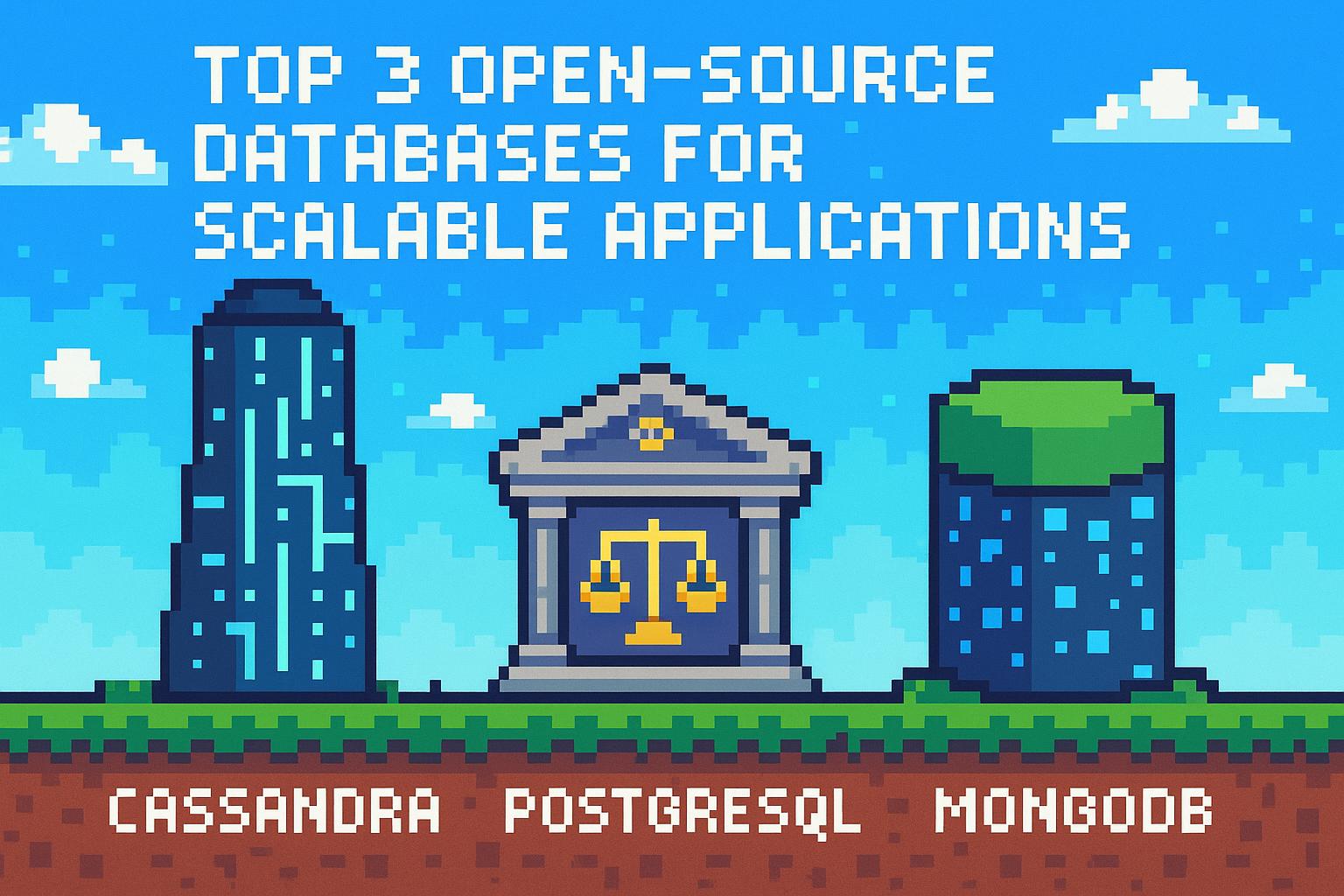
When you're building applications that need to handle growth without breaking the bank, open-source databases are a no-brainer. They cut out licensing costs, offer flexibility for developers, and are backed by massive communities that keep them secure and up-to-date. By 2025, three databases stand out in the UK for their ability to scale: Apache Cassandra, PostgreSQL, and MongoDB. Each has its strengths, and the right choice depends on your specific needs.
- Apache Cassandra: Perfect for high-demand environments with massive datasets. Its peer-to-peer setup ensures no single point of failure, and it scales horizontally without downtime. Ideal for real-time analytics, IoT, and financial services.
- PostgreSQL: A relational database that's rock-solid for data accuracy and complex queries. It supports both SQL and JSON, making it versatile for apps needing strong transactional integrity. Think e-commerce or financial systems.
- MongoDB: A document-based database that's great for agile projects with evolving data structures. It scales horizontally with sharding and is brilliant for product catalogues, content management, and real-time analytics.
Each of these databases brings something unique to the table, whether it's Cassandra's fault tolerance, PostgreSQL's ACID compliance, or MongoDB's flexible data model. The trick is matching the database to your application's demands. If you're unsure which one fits, services like Metamindz's CTO-as-a-Service can guide you through the decision-making. The right choice now can save you headaches - and costs - down the line.
The Best in Open Source Database Software: Top 10 Picks
1. Apache Cassandra
Apache Cassandra is a powerful distributed NoSQL database known for its ability to handle large-scale data with ease. Its standout feature is a masterless, peer-to-peer architecture where all nodes are equal. This design ensures continuous availability, even if some nodes fail - an attractive quality for UK organisations managing massive datasets.
Scalability Approach
Cassandra’s approach to scaling is straightforward and efficient. It automatically distributes data across multiple nodes (a process known as sharding). Need more capacity? Just add more nodes. The system will redistribute the data in the background without causing any disruption. This horizontal scaling model is perfect for businesses experiencing rapid data growth.
Consistency Model
One of Cassandra’s strengths is its tunable consistency. Developers can choose the replication mode that best suits their needs. While Cassandra is inherently designed to be eventually consistent - meaning nodes may temporarily have slight differences - it ensures they all align over time. This trade-off between consistency and availability is what makes it so resilient and reliable.
Data Model
Cassandra uses a column-family data model, which is somewhat like a table in a relational database. Each row has a unique key, and the associated columns are stored together. This design is particularly well-suited for time-series data and wide-column storage needs. Instead of relying on traditional hash tables, Cassandra sorts data using primary keys, which boosts its performance for scenarios requiring quick access to large datasets.
Ideal Use Cases
Cassandra shines in applications like big data, IoT, and real-time analytics. Think transaction logging, fraud detection, or processing billions of daily events. Its fault-tolerant design allows failed nodes to be swapped out without any downtime, making it a go-to choice for industries like healthcare, financial services, and e-commerce - sectors where scalability and resilience are non-negotiable.
For UK businesses looking to implement Cassandra, CTO-as-a-Service experts can provide the guidance needed to maximise its potential. With its distributed, fail-safe architecture, Cassandra is built to thrive in high-demand environments.
2. PostgreSQL
PostgreSQL, or simply Postgres, is a robust open-source SQL database[4]. Built through the collaboration of a global developer community, it supports both SQL and JSON queries, making it a versatile choice for handling relational and non-relational data alike.
What makes PostgreSQL stand out is its focus on data accuracy and compliance with standards. For UK organisations that need to build systems where precision is non-negotiable, its transaction support and ACID compliance are indispensable.
Scalability Approach
PostgreSQL is well-equipped to handle scaling, adapting to different needs with ease. It can scale vertically by upgrading hardware resources or horizontally through read replicas and partitioning.
One of its strengths lies in its diverse indexing options - like B-tree, hash, and full-text indexes - which allow developers to fine-tune query performance as data grows[1]. In addition, modern managed PostgreSQL services now offer elastic cluster capabilities, enabling it to scale across multiple nodes for distributed setups[3].
Consistency Model
PostgreSQL adheres to the ACID principles (Atomicity, Consistency, Isolation, Durability), ensuring strong consistency and reliable data integrity[6]. Transactions are processed in an all-or-nothing manner: they either complete entirely or are rolled back fully, reducing the risk of data corruption.
This strong consistency is a major advantage for industries where data accuracy is critical - think financial services, e-commerce, or healthcare. Unlike NoSQL systems that often prioritise availability and settle for eventual consistency, PostgreSQL ensures data remains valid and reliable at all times.
Data Model
PostgreSQL's ability to support multiple data models makes it incredibly adaptable. While it handles traditional relational data structures - tables, rows, and columns - it also supports JSON and JSONB data types, enabling developers to manage semi-structured data alongside relational datasets.
It doesn’t stop there: PostgreSQL supports arrays, hstore (key-value pairs), and full-text search, making it suitable for a wide range of applications. Its extensibility is another highlight. Extensions like PostGIS enable advanced geospatial queries for location-based services, while others focus on time-series data or complex analytics[3].
Ideal Use Cases
PostgreSQL is a top choice for applications requiring dependable data consistency, complex query capabilities, and robust transactional support[6]. For example:
- E-commerce platforms: Manage product catalogues, orders, and customer data with reliable transactional integrity.
- Financial services: Handle sensitive operations securely, thanks to ACID compliance.
- Content management systems and business intelligence tools: Leverage its advanced querying for detailed reporting and aggregations.
For UK organisations building scalable applications, PostgreSQL shines when data integrity and advanced querying are more important than extreme horizontal scalability. Managed services like AWS RDS for PostgreSQL and Azure Database for PostgreSQL reduce operational burdens by automating tasks like maintenance, patching, and scaling for both compute and storage[3].
If you're navigating PostgreSQL deployment and scalability, expert guidance can make all the difference. At Metamindz, our CTO-as-a-Service offering can help UK organisations make smarter decisions about database architecture. We’ll work with you to design scalable, reliable systems that meet your long-term goals while maintaining the integrity PostgreSQL is known for.
sbb-itb-fe42743
3. MongoDB
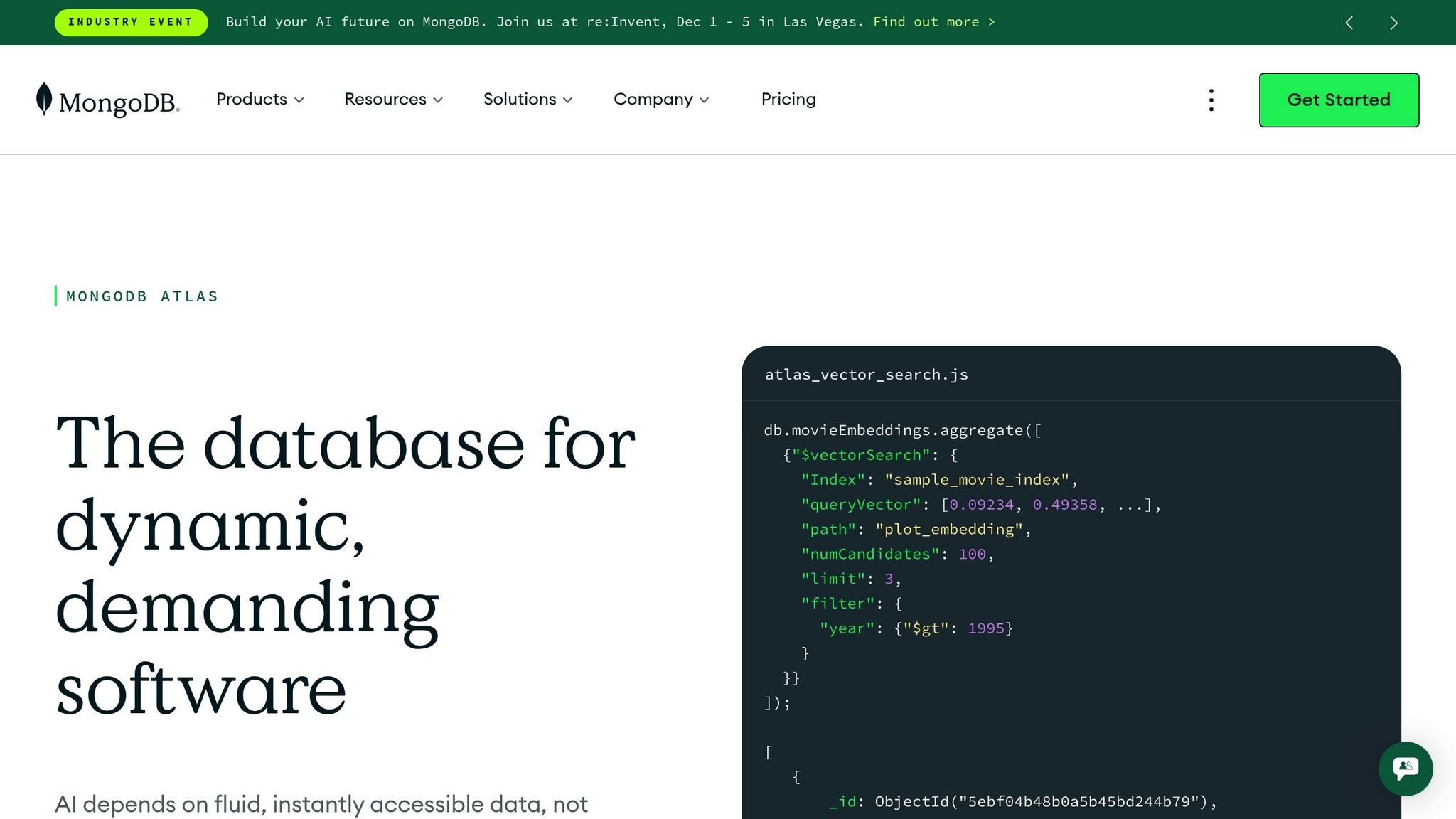
MongoDB is a widely-used open-source NoSQL database that stores data in flexible, JSON-like documents with dynamic schemas instead of rigid tables and rows. This document-oriented design means each document in a collection can have its own structure, giving developers the flexibility to adjust data models as needs evolve. For UK organisations working on projects where agility is key and development timelines are tight, this adaptability can be a game changer. On top of that, MongoDB scales efficiently, making it a solid choice for handling growing and changing data requirements.
Scalability Approach
MongoDB handles scalability through horizontal scaling, using automatic sharding and replication. Here’s how it works: data is split into smaller chunks, or shards, with each shard holding a portion of the dataset. This allows MongoDB to manage large volumes of data without losing performance.
Sharding uses a chosen key to distribute data across nodes, making it easy to expand horizontally as your data grows. Replication is handled through replica sets, which not only ensure redundancy but also improve read performance. Unlike vertical scaling, which eventually hits hardware limits, horizontal scaling with MongoDB lets you keep adding nodes as demand increases. However, choosing the right shard key is critical - an inefficient choice can lead to performance hiccups.
Consistency Model
MongoDB offers flexible consistency options, giving developers the ability to balance consistency and availability based on the needs of their application. It supports various write concern levels, ranging from unacknowledged writes (fire-and-forget) to acknowledged writes replicated across multiple nodes. This means you can prioritise stronger consistency when it’s critical or lean towards availability and speed by accepting eventual consistency.
With support for multi-document ACID transactions in recent versions, MongoDB has improved its transaction capabilities. That said, it still doesn't match the transactional robustness of traditional relational databases like PostgreSQL. For organisations where data integrity is non-negotiable, this is something to weigh carefully.
Data Model
MongoDB stores data in BSON (Binary JSON) format, which supports nested objects and arrays. This dynamic schema design is particularly useful for applications where data structures might change over time or vary greatly between records.
The database also supports dynamic queries, indexing, and aggregation. Its aggregation framework allows you to build powerful data processing pipelines, enabling you to transform and analyse data directly within the database. MongoDB’s indexing options - including single-field, compound, text, and geospatial indexes - boost query performance, even for complex datasets.
Ideal Use Cases
Given its scalable architecture and flexible data model, MongoDB fits well in scenarios like:
- Product catalogues and e-commerce platforms: Perfect for handling diverse product attributes without needing a fixed schema.
- Content management systems and social media platforms: Great for managing user-generated content with varying structures.
- Real-time analytics and IoT applications: Efficiently processes large and diverse datasets, with its aggregation framework enabling on-the-fly data analysis.
- Mobile applications: Its JSON-like data model aligns seamlessly with JSON-based APIs, bridging the gap between stored data and application objects.
MongoDB can be deployed on-premise, in the cloud, or as a hybrid setup, giving organisations flexibility to meet deployment and compliance needs. For instance, UK organisations can host MongoDB on their own infrastructure to maintain full control and comply with data residency regulations, or they can opt for managed services to reduce operational complexity.
If you're building scalable applications with evolving data needs, MongoDB is worth considering as an alternative to traditional relational databases. Not sure if it’s the right fit? Metamindz's CTO-as-a-Service can help UK organisations weigh the trade-offs. They'll work with you to evaluate whether MongoDB’s flexibility and scalability align with your goals, ensuring you pick the best database for long-term success.
Comparison Table
Here's a quick comparison of the key attributes of Apache Cassandra, PostgreSQL, and MongoDB, based on the detailed breakdown above:
| Feature | Apache Cassandra | PostgreSQL | MongoDB |
|---|---|---|---|
| Scalability Approach | Horizontal scaling with a masterless, peer-to-peer setup, eliminating single points of failure[2]. | Primarily vertical scaling with resource upgrades; supports horizontal scaling via read replicas and elastic clusters for minimal downtime[3]. | Scales horizontally using sharding, distributing data across multiple servers[1]. |
| Consistency Model | Offers tunable consistency, allowing a balance between consistency and availability as per need[1]. Supports both synchronous and asynchronous replication[2]. | Fully ACID-compliant, ensuring strong transactional integrity[6]. | Defaults to eventual consistency but includes multi-document ACID transactions in newer versions[1]. |
| Data Model | Column-family store supporting wide columns, documents, and key-value structures[1]. Designed for flexibility in schema. | Relational model with rows and columns; supports JSON data via extensions[6]. Includes PostGIS for geospatial capabilities[3]. | Document-oriented NoSQL using BSON format. Dynamic schemas allow varied document structures, including nested objects and arrays. |
| Ideal Use Cases | Real-time analytics, IoT data processing, social media platforms, and financial services[1]. Suitable for handling billions of transactions and high-availability scenarios[2]. | Business applications, e-commerce platforms, and content management systems[6]. Ideal for enterprise apps requiring complex queries and AI/ML workloads with vector search[5]. | Best for product catalogues, e-commerce, content management, and user profiles. Works well with unstructured data, evolving schemas, and mobile apps. |
| Learning Curve | Steep; requires knowledge of replication and consistency tuning[1]. | Moderate, with extensive documentation, mature tooling, and strong community support. | Moderate; designed with developers in mind. Easier to set up and operate initially[1]. |
| Deployment Flexibility | Can be deployed on-premise, in the cloud, or as a hybrid solution[1]. | Available on all major cloud providers (AWS, Azure, Google Cloud) and on-premises. Managed services reduce operational complexity[6]. | Supports on-premise, cloud, or managed services via providers like AWS and Azure[1]. |
Performance Characteristics
When it comes to performance, Cassandra excels at high availability and real-time data distribution, particularly for applications requiring massive data throughput[6]. PostgreSQL shines in handling complex queries and transactions, although performance can dip with very large datasets unless indexing and partitioning are optimised[6]. MongoDB, meanwhile, offers excellent scalability and supports dynamic queries, indexing, and aggregation. For lightning-fast operations, it pairs well with in-memory caching tools like Redis[1].
For UK-based organisations with strict data residency rules, all three databases support on-premises deployment. If reducing operational overhead is a priority, managed cloud options are readily available.
Operational Complexity
Cassandra demands a strong understanding of distributed systems to manage its architecture effectively. PostgreSQL is relatively easier to operate, thanks to its mature ecosystem. MongoDB sits somewhere in the middle, with a simpler initial setup than Cassandra but enough flexibility to handle evolving data needs.
Transaction Support & ACID Compliance
PostgreSQL leads the pack with full ACID compliance, making it a solid choice for industries like finance or healthcare where data integrity is critical. MongoDB offers multi-document ACID transactions, bridging the gap between eventual and strong consistency[1]. Cassandra, on the other hand, focuses on eventual consistency with tunable options, making it a fit for scenarios where strict consistency isn’t a priority[1].
Licensing and Support
All three databases are open-source, meaning they’re free to use and modify[1]. Cassandra is supported by the Apache Software Foundation, with enterprise backing from companies like DataStax[2]. PostgreSQL benefits from a strong community and commercial support options through the PostgreSQL Global Development Group[6]. MongoDB, backed by MongoDB Inc., offers commercial support alongside an active developer community[1]. For UK businesses, these open-source solutions provide cost-effective alternatives without licensing fees, although enterprise support costs can vary.
Which One Should You Choose?
The best choice depends on what you’re building. If you need to handle millions of events per second with acceptable eventual consistency, go with Cassandra. For complex queries and strict data integrity, PostgreSQL is the better option. And if you’re working on a flexible, document-based app with rapidly changing schemas, MongoDB is likely your best bet.
Conclusion
Choosing the right database boils down to matching its technical capabilities with your scalability goals. Apache Cassandra shines with its horizontal scaling and fault tolerance, PostgreSQL excels in ACID compliance and relational features, and MongoDB stands out for its flexible document model and adaptability.
The decision really hinges on your specific needs: how your data is structured, how consistent it needs to be, and how much growth you’re expecting. While all three databases are open source and free, don’t overlook the importance of operational expertise and infrastructure management - they can make or break your implementation.
For UK organisations, aligning your database choice with your business objectives is critical. Whether it’s Cassandra’s distributed architecture, PostgreSQL’s relational capabilities, or MongoDB’s flexibility, expert guidance can make all the difference. Metamindz provides fractional CTO services and technical due-diligence assessments to help you navigate these decisions. As Tanya Mulesa from Aeva Health puts it:
"Lev's blend of technical expertise and strategic insight has been invaluable." [7]
A fractional CTO session is a great starting point. It can help you understand your current tech setup and guide you towards building a lean, scalable database architecture. This proactive approach not only avoids expensive migrations down the road but also sets the stage for sustainable growth - whether you’re developing B2B SaaS platforms, e-commerce systems, or IoT solutions.
FAQs
How can I choose the best open-source database for my application?
Choosing the best open-source database for your application isn't a one-size-fits-all decision. It all boils down to what your project demands - whether that's scalability, the type of data you're working with, or specific performance goals. Here's what you should keep in mind:
- Data type and structure: What kind of data will your application primarily handle? If it's structured data, a relational database like PostgreSQL might be your go-to. On the other hand, if you're dealing with unstructured data, a NoSQL option like MongoDB could be a better fit.
- Scalability: Think about the future. Will your database need to manage a growing load of data or traffic? Some databases are built for horizontal scaling (adding more servers), while others shine with vertical scaling (beefing up a single server).
- Use case: What's the main goal of your application? For example, if you're building something like a real-time analytics tool, you'll want a database that can handle lightning-fast queries. But if you're working on an e-commerce platform, ensuring consistent transactions might take priority.
If you're feeling stuck or unsure, it’s worth reaching out to a tech expert. Services like CTO-as-a-Service can offer tailored advice to help you choose the database that’s just right for your project. After all, making the right choice now can save you a lot of headaches down the line.
What challenges can arise when managing and scaling these open-source databases, and how can they be addressed?
Managing and scaling open-source databases can be tricky, especially as your application grows. You might encounter performance slowdowns, data consistency hiccups, or simply find yourself needing expertise that’s hard to come by.
To tackle these issues, start by ensuring your database is configured correctly - this can prevent a lot of headaches before they even start. Next, take a close look at your queries. Are they as efficient as they could be? Sometimes a small tweak to a query can make a massive difference in performance. It’s also worth setting up solid monitoring tools. These can help you spot potential problems early, so you’re not scrambling to fix things when they go wrong.
For data consistency and availability, regular backups are non-negotiable. Pair these with replication strategies to keep your data safe and accessible, even if something goes sideways. And if all of this feels overwhelming, don’t hesitate to bring in the pros. Whether it’s training your team or consulting with seasoned database experts, getting the right guidance can make scaling and maintaining your database a much smoother ride.
Can these open-source databases be integrated with existing systems, and what should UK businesses consider during integration?
Yes, open-source databases can work well with existing systems, but there are a few key things to keep in mind, especially for businesses in the UK. First off, compatibility is everything. Make sure the database supports the programming languages, frameworks, and tools you're already using. Nobody wants to be stuck with a shiny new database that doesn’t fit into the current tech puzzle. And while you're at it, think about scalability - can it handle your business as it grows?
For UK organisations, compliance with data protection laws like the UK GDPR is non-negotiable. When you're integrating, you’ll need to ensure robust data security practices are in place, such as encryption and strict access controls.
Another thing to look at is support and documentation. A well-documented database with an active user community can make integration much smoother and quicker. And don’t forget to think about the long-term maintenance. Will there be regular updates? Is the community active enough to address potential issues? These are the things that will keep your database secure and dependable for years to come.